Deep vein thrombosis (DVT) is a clot in the deep veins of your leg. It can cause swelling, pain, and tenderness in your leg. A piece of the blood clot can break off and travel to your lungs. This may cause a serious and life-threatening condition called a pulmonary embolism (PE).
What is intermittent pneumatic compression?
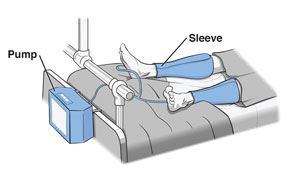
Intermittent pneumatic compression (IPC) uses a simple machine to help prevent DVT. The device has 2 cuffs that automatically fill with air and painlessly squeeze your legs. This increases blood flow through the veins of your legs and helps prevent blood clots.
Why IPC is used
In most cases, IPC is done in the hospital. You may need IPC to lower your risk for DVT if you have:
-
Had a recent surgery
-
A health condition that limits your ability to move, such as an injury or stroke
-
An injury to a deep vein in one of your legs
-
An inherited blood disorder that increases blood clotting
IPC is one way to help prevent DVT. A blood-thinning medicine, such as warfarin, may also be prescribed to help lower your risk for DVT. This medicine may work better than the compression device in preventing DVT, but may increase the risk of bleeding. IPC and blood thinners may also be used together.
Risks of IPC
The risks of IPC include:
-
Discomfort, warmth, or sweating under the cuffs
-
Skin sores
-
Nerve damage (rare)
-
Pressure injury (rare)
Skin care can help prevent these complications. People with certain health conditions should not use IPC devices. For example, people with leg ulcers, burns, or some conditions affecting the arteries and veins of the legs (peripheral vascular disease) have a higher risk for problems. Older adults may be more at risk for skin sores. Talk with your healthcare provider about which risks apply most to you.
What happens during IPC
There are many types of IPC devices. The cuffs may cover your calves, or they may go around your thighs and calves. A nurse or aide will apply the IPC cuffs. They may show you how to take the cuffs off and put them back on. When fastened around your legs, the cuffs should feel snug, but they shouldn’t be too tight. You should be able to place a finger between the cuffs and your legs.
Next the cuffs are attached to the compression machine. The machine will cycle between inflating and deflating the cuffs. This may feel a little strange at first. Let your healthcare provider know if it's uncomfortable.
Call for help if you need to get up to use the bathroom, go for a walk, or take a shower. Your nurse or aid will help you take off your cuffs before you leave your bed and put them back on when you return to your bed. If your healthcare provider has told you not to get up on your own, don't leave your bed without help from staff. Always take off the cuffs completely before leaving your bed.
Tell your healthcare provider right away, if any of the following occur:
-
Swelling, pain, or redness in either of your legs
-
A sore on the skin under either of the cuffs
-
The cuffs feel too tight or cause pain
After IPC
Your healthcare provider will tell you when you can stop using the IPC device. This will be when you have less of a risk for DVT.
Your healthcare provider may give you other directions about ways to help prevent DVT. These may include being as active as possible and moving your legs, ankles, and feet when you are inactive. Follow all of your healthcare provider’s instructions.

Find a cardiac specialist
Because every beat matters, our cardiac doctors are dedicated to providing care like no other can.
Related Articles
Discharge Instructions: Caring for Your Central Line
You are going home with a central line. This is a tube put in a vein that leads to your heart. It provides medicine during your treatment. Because a central line has a high infection risk, you must take extra care. This sheet will help you remember what to do at home.
DVT Prevention: Intermittent Pneumatic Compression Devices
Intermittent pneumatic compression (IPC) devices are used to help prevent blood clots in the deep veins of the legs. The devices use cuffs around the legs that fill with air and squeeze your legs. This increases blood flow through the veins of your legs and helps prevent blood clots.
After Open Abdominal Aortic Aneurysm Surgery
You have had surgery to repair an abdominal aortic aneurysm. This happens when the main blood vessel in your abdominal area weakens and expands like a balloon. Here's what you need to know following surgery.
Vascular Access Port Implantation
Vascular access port implantation is surgery to place a port under your skin. This allows medicine or nutrition to be sent right into your bloodstream. Here's what you need to know about the procedure.