Diabetes increases your chances of foot problems. So inspect your feet every day. This helps you find small skin irritations before they become serious sores (ulcers) or infections. If you have trouble seeing the bottoms of your feet, use a mirror or ask a family member or friend to help.
How to check your feet
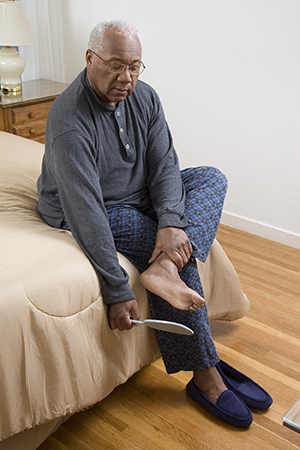
These tips can help you look for foot problems. Try to check your feet at the same time each day, such as when you get out of bed in the morning:
-
Check the top of each foot. The tops of toes, back of the heel, and outer edge of the foot can get a lot of rubbing from poor-fitting shoes.
-
Check the bottom of each foot. Daily wear and tear often leads to problems at pressure spots.
-
Check the toes, nails, and between each toe. Fungal infections often occur between toes. Toenail problems can also be a sign of fungal infections or lead to breaks in the skin.
-
Check your shoes, too. Loose objects inside a shoe can injure the foot. Use your hand to feel inside your shoes for things like pebbles, loose stitching, or rough areas that could irritate your skin.
Warning signs
Look for any color changes in the foot. Redness with streaks can signal a severe infection, which needs fast medical care. Tell your healthcare provider right away if you have any of these problems:
-
Swelling, sometimes with color changes, may be a sign of poor blood flow or infection. Symptoms include soreness and an increase in the size of your foot. Extra fluid (edema) makes it harder for a wound to heal.
-
Warm or hot areas on your feet may be signs of infection. A foot that is red when it hangs down may not be getting enough blood. It also may be cold.
-
Feelings such as burning, tingling, or “pins and needles” can be signs of a nerve problem. Also check for numb areas. You may have an injury and not be aware of it due to loss of feeling.
-
Hot spots are caused by friction or pressure. Look for hot spots in areas that get a lot of rubbing. Hot spots can turn into blisters, calluses, or sores.
-
Cracks and sores are caused by dry or irritated skin. They're a sign that the skin is breaking down. This can lead to infection.
-
Toenail problems to watch for include nails growing into the skin (ingrown toenail). This can cause redness or pain. Thick, yellow, or discolored nails can be a sign of a fungal infection.
-
Leaking fluid and a strong smell can happen with untreated sores. Call your provider right away if you have white or yellow fluid, bleeding, or a strong odor coming from a sore.
-
If you find anything on your daily foot exam that concerns you, call your provider. It's very important to take care of any foot problem right away. This can help prevent any serious complications.
Online Medical Reviewer: Marianne Fraser MSN RN
Online Medical Reviewer: Raymond Kent Turley BSN MSN RN
Online Medical Reviewer: Robert Hurd MD
Date Last Reviewed: 08/01/2023
© 2000-2025 The StayWell Company, LLC. All rights reserved. This information is not intended as a substitute for professional medical care. Always follow your healthcare professional's instructions.