If you are at risk for vision loss, you may be told to check your eyesight regularly using the Amsler grid. Below is the grid and instructions for using it.
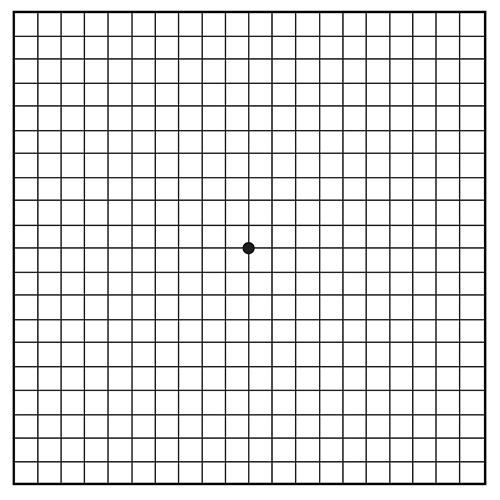
How to use the Amsler grid
-
Use the grid in a well-lighted area.
-
Wear glasses or contact lenses if you often wear them. If you are wearing bifocals, look through the part of the lens for near vision.
-
Hold the grid at your normal reading distance (about 16 inches).
-
Cover your left eye.
-
With your right eye, look at the dot in the middle of the grid. You should still be able to see all 4 corners of the grid.
-
While looking at the dot, notice if:
-
Any lines look wavy
-
Any lines disappear
-
The boxes change shape or are missing
-
-
Keep a log with the dates you used the grid. Write down any vision changes from the last time you used it.
-
Now do this again. This time, cover your right eye.
-
Call your healthcare provider right away if you notice any vision changes.
How often should I check my vision?
Use the Amsler grid as often as your eye care provider advises. Keep the grid and the log where you’ll remember to use them. Some people put the grid on their fridge door. Call your eye care provider right away if you notice any changes with your eyesight. This includes if your vision gets better.
Online Medical Reviewer: Marianne Fraser MSN RN
Online Medical Reviewer: Raymond Kent Turley BSN MSN RN
Online Medical Reviewer: Robert Hurd MD
Date Last Reviewed: 04/01/2024
© 2000-2025 The StayWell Company, LLC. All rights reserved. This information is not intended as a substitute for professional medical care. Always follow your healthcare professional's instructions.