Dismiss Modal

Definition

Anatomy of the Digestive System (Child)

Choose a preferred language

The digestive system breaks food down into basic nutrients that can be used by the body. As food moves through the digestive tract, it’s digested (broken down into parts and absorbed into the bloodstream). Certain organs, such as the liver, gallbladder, and pancreas, help with this digestion. Parts of food that can’t be digested become stool. This is waste material that’s passed out of the body.
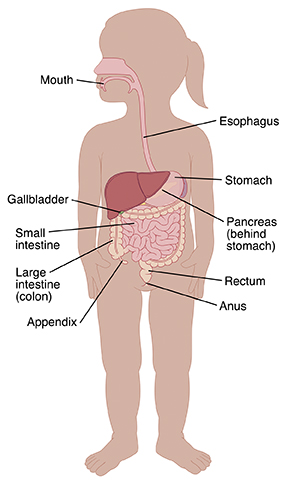
Outline of toddler girl showing digestive tract.


Digestive system

  • The mouth takes in food and breaks it into pieces. It starts the process of digestion.

  • The esophagus moves food from the mouth to the stomach.

  • The stomach breaks food down into a liquid mixture.

  • The small intestine digests food further and absorbs nutrients. What’s left is passed on to the colon as liquid waste.

  • The large intestine (colon) absorbs water, salt, and other minerals from liquid waste, forming a solid stool.

  • The rectum stores stool until a bowel movement occurs. 

  • The anus is the opening where stool leaves the body.

  • The liver makes bile (a fluid that helps digest fat). It also breaks down nutrients and stores energy.

  • The gallbladder stores bile.

  • The pancreas makes enzymes that help with digestion.

  • The appendix is a small, hollow structure that’s attached to the large intestine. It has no clear function in the body. But it can become blocked and infected.

Featured in

© 2000-2025 The StayWell Company, LLC. All rights reserved. This information is not intended as a substitute for professional medical care. Always follow your healthcare professional's instructions.

Find a doctor that's right for you.

From routine check-ups to groundbreaking treatments and beyond, Crestner Health is here to help you live your healthiest life.

Search our doctors
Related Articles
Read article
Digestive Health
Discharge Instructions for Intussusception (Child)

This is a health problem in which part of the intestine slides inside another part. Blood flow to part of the intestine can then become blocked. This can cause severe damage if not treated. Here's how to care for your child after they are back at home.

Read article
Digestive Health
Lab Tests to Diagnose Digestive Diseases in Children

Read on for details about common lab tests used to diagnose problems with the digestive system in children.

Read article
Digestive Health
Food Poisoning (Infant/Toddler)

Dehydration is the main concern when a child has food poisoning. This sheet can help you care for your sick child at home.

Read article
Digestive Health
Viral Diarrhea (Infant/Toddler)

The biggest concern with diarrhea in a baby is dehydration. This sheet can help you care for your baby while they are ill.

Schedule a Colon Cancer Screening

A screening is the best way to catch colorectal cancer early, when treatments is more successful.

Schedule an Appointment