Appendicitis is an inflammation or infection of the appendix. It can cause pain and other problems that start quickly and get worse. Treatment should start right away to prevent serious problems.
Your appendix
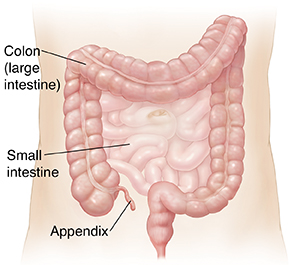
The appendix is a small pouch about the size of your little finger. It hangs off the colon (large intestine). The purpose of the appendix is unclear, although it is thought to be part of the immune system, similar to lymph nodes. If it gets blocked (obstructed), it may get infected.
Symptoms of appendicitis
Symptoms tend to start quickly, often over 1 to 2 days. They can include:
-
Pain that starts in the center of your belly and moves to your lower right side
-
Worse pain and pressure on your side when you walk
-
Stomach upset (nausea) and vomiting
-
Low appetite
-
Fever
-
Tiredness
-
Either diarrhea or constipation
Treatment
-
Antibiotic medicine. In some cases, your healthcare provider may advise treatment with antibiotics. This may be an option if the appendix has not ruptured and you don't have other problems or risks. Using antibiotics may help keep you from needing surgery.
-
Surgery. Removing the appendix with surgery is common. This is called an appendectomy. This is often the best choice. It’s best to remove the appendix before it bursts. If the appendix bursts, it can cause severe health problems. Not having an appendix shouldn’t affect your long-term health.
Online Medical Reviewer: Heather M Trevino BSN RNC
Online Medical Reviewer: Robyn Zercher FNP
Online Medical Reviewer: Ronald Karlin MD
Date Last Reviewed: 04/01/2024
© 2000-2025 The StayWell Company, LLC. All rights reserved. This information is not intended as a substitute for professional medical care. Always follow your healthcare professional's instructions.