Management

Hearing Protection at Work: Your Hearing Test

Choose a preferred language

An audiometric test measures how well you hear. It's quick and painless. The Occupational Safety and Health Administration (OSHA) and your employer may require this test each year. Follow through with it. You can't "fail" a hearing test. The test results just help your employer know whether more hearing protection is required.


What to expect

You may be tested in a clinic or in a mobile testing van. The test lasts only a few minutes and is easy to do. An audiologist (hearing specialist) will give you headphones and seat you in a soundproof room. The audiologist will then play tones at many pitches and volumes. When you hear the tones, you press a button or raise your hand.
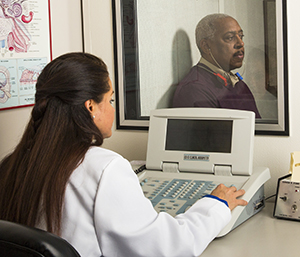
Audiologist performing hearing test on man sitting in booth.


Your test results

The test result is a graph called an audiogram. It shows how well you hear. The result of your first hearing test will be your baseline. Future tests will be compared to your baseline to see whether your hearing has changed. If your test shows a change from your baseline, you may be tested more often. It could mean that you and your employer need to change the type of protection you usually wear.

Online Medical Reviewer: Ashutosh Kacker MD

Online Medical Reviewer: Daphne Pierce-Smith RN MSN CCRC

Online Medical Reviewer: Marianne Fraser MSN RN

Date Last Reviewed: 10/01/2024

© 2000-2025 The StayWell Company, LLC. All rights reserved. This information is not intended as a substitute for professional medical care. Always follow your healthcare professional's instructions.


Find a doctor that's right for you.

From routine check-ups to groundbreaking treatments and beyond, Crestner Health is here to help you live your healthiest life.

Search our doctors
Related Articles
Read article
Ear, Nose, and Throat
Adjusting to Having a Hearing Aid: New Ways to Hear

It's not easy to focus on a conversation when there's a lot of background noise. That's where aural rehab can help. With this training, you'll improve your hearing by learning new listening techniques. Read on to learn more.

Read article
Ear, Nose, and Throat
Coping with Ménière’s Disease: Other Things You Can Do

Take care of your body and your emotions. Also talk to your friends and family. The more they know about Meniere's disease, the easier it will be for them to understand what you're going through and to offer help when they can.

Read article
Ear, Nose, and Throat
Self-Care for Sinusitis

Sinusitis can often be managed with self-care. Self-care can keep sinuses moist and make you feel more comfortable. Remember to follow your health care provider's instructions closely, which can make a big difference in getting your sinus problem under control.

Read article
Ear, Nose, and Throat
Swallowing Exercises: How to Do Larynx-Lifting Exercises

Larynx-lifting exercises help you increase the strength and mobility of the muscles of your larynx (voice box) over time. This may improve your ability to swallow.