The eye care provider may recommend strabismus surgery to help align your child’s eyes. During surgery, certain eye muscles are adjusted. This helps the muscles better control how the eye moves. Often, surgery is done in addition to other treatments. In most cases, children who have strabismus surgery go home the same day.
How surgery works
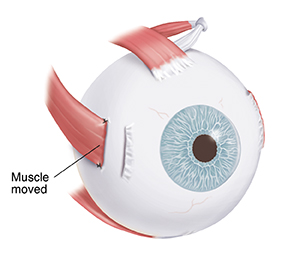
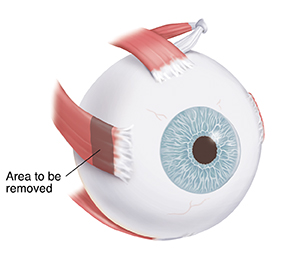
Strabismus surgery is a safe, common procedure. The eye care provider simply changes the position or length of an eye muscle. This small change can pull the eye into proper alignment. The two most common methods of surgery are:
-
Recession. A muscle is moved to a new position on the eye.
-
Resection. Part of an eye muscle is removed then reattached to the eye at the original place.
Before surgery
Prepare your child for the procedure as you have been instructed. In addition:
-
A few days before surgery, your child may have an eye exam so the healthcare provider can double-check eye measurements.
-
Follow any directions your child is given for taking medicines and for not eating or drinking before surgery.
On the day of surgery, your child:
-
Can wear their favorite pajamas and bring along a toy
-
Will be given medicine (anesthesia) that makes them sleepy; surgery won’t start until they are asleep
After surgery
Each child reacts to surgery in their own way. Some children may be afraid to open their eyes at first. Children are often sleepy or cranky for several hours after surgery. If your child’s response worries you, talk with the eye care provider. After surgery, your child:
-
May have a red eye that will go away after several weeks
-
Will probably not need any pain medicine since recovering from strabismus surgery is not painful for most children
-
May still need other treatment, such as glasses or an eye patch
When to call the healthcare provider
Call your child’s eye care provider if:
-
Your child’s eyelid is very swollen
-
A puslike discharge comes from the eye (a few bloody tears are normal)
-
Your child vomits more than once
-
Your child has a fever of 100.4°F (38°C) or higher, or as directed by your child's healthcare provider
Risks and possible complications
As with any surgery, strabismus surgery has risks. These include:
-
The eyes not being perfectly aligned—some children need more surgery
-
Bleeding in or around the eye
-
Eye infection
-
Risks of anesthesia (the eye care provider can tell you more about these)
Featured in
Online Medical Reviewer: Chris Haupert MD
Online Medical Reviewer: Tara Novick BSN MSN
Online Medical Reviewer: Tennille Dozier RN BSN RDMS
Date Last Reviewed: 12/01/2022
© 2000-2025 The StayWell Company, LLC. All rights reserved. This information is not intended as a substitute for professional medical care. Always follow your healthcare professional's instructions.