You have a condition called heart failure. To assess your condition, your healthcare provider will examine you, ask questions, and do some tests. Along with looking for signs of heart failure, the healthcare provider looks for any other health problems that may have led to heart failure. The results of your evaluation will help your provider form a treatment plan.
Health history and physical exam
Your visit will start with a review of your health history. Tell the healthcare provider about any symptoms you have and about all medicines you take. Then you’ll have a physical exam. Your healthcare provider will listen to your heartbeat and your breathing. You’ll also be checked for swelling (edema) in your legs and neck. When you have fluid buildup or fluid in the lungs, it can be from congestive heart failure.
Diagnosing heart failure
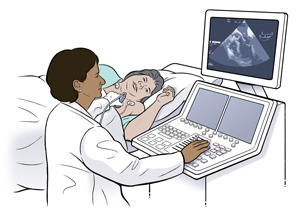
These tests may be done to diagnose heart failure:
-
X-rays. These imaging tests show the size and shape of your heart. The pictures can also show fluid in your lungs.
-
An electrocardiogram (ECG). This shows the pattern of your heartbeat. Small pads (electrodes) are placed on your chest, arms, and legs. Wires connect the pads to the ECG machine. The ECG records your heart’s electrical signals. This can give the healthcare provider information about heart function and electrical activity in the heart.
-
An echocardiogram. This uses ultrasound waves to show the structure and movement of your heart muscle. This shows how well the heart pumps. It also shows the thickness of the heart walls, and if the heart is enlarged. It's one of the most useful, noninvasive tests, as it gives information about the heart's general function. This helps your healthcare provider make treatment decisions.
-
Lab tests. These check small amounts of blood or urine for signs of problems. A BNP (B-type natriuretic peptide) lab test can help diagnose and evaluate heart failure. The ventricles secrete more BNP when heart failure worsens. Lab tests can also give information about other heart problems or other illnesses such as diabetes, anemia, or kidney disease.
Your treatment plan
Based on the results of your assessment and tests, your healthcare provider will make a treatment plan. This plan aims to ease some of your symptoms and help make you more comfortable. Your treatment plan may include:
-
Medicine to help your heart work better and improve your quality of life
-
Changes in what you eat and drink to help prevent fluid backup in your body
-
Weighing yourself daily and watching your symptoms to see how well your treatment is working
-
Exercise to help you stay healthy
-
Help to stop smoking
-
Support to help adjust to the changes
-
Referrals to other specialists
Online Medical Reviewer: Ronald Karlin MD
Online Medical Reviewer: Stacey Wojcik MBA BSN RN
Online Medical Reviewer: Steven Kang MD
Date Last Reviewed: 04/01/2024
© 2000-2025 The StayWell Company, LLC. All rights reserved. This information is not intended as a substitute for professional medical care. Always follow your healthcare professional's instructions.
Find a cardiac specialist
Because every beat matters, our cardiac doctors are dedicated to providing care like no other can.
Related Articles
Heart Failure: Tracking Your Weight
A sudden weight gain or a steady rise in weight is a warning sign that your body is retaining too much water and salt. This could mean your heart failure is getting worse. Weighing yourself each day is the best way to know if you're retaining water.
Medicines for Cardiomyopathy
Medicines can help you feel better and stay as healthy as you can. Take your medicines exactly as instructed. Never stop taking medicines or change dosage unless told to by your doctor, even if you feel better. Here are some capsule definitions of medicines that might be prescribed.
All About Blood Pressure Medicine
Several kinds of medicine are commonly prescribed for high blood pressure. Here are some of the main types.
Living with a Pacemaker
You can usually do almost everything you did before you got your pacemaker. See your doctor regularly to help ensure that you remain healthy and feeling good. Here are some things to avoid.