The name of my ACE inhibitor is:
______________________________
Why might I need an ACE inhibitor?
-
It helps you stay out of the hospital.
-
It helps you live longer.
-
It strengthens your heart and protects your kidneys.
-
It can help control your blood pressure.
-
It can reduce the risk of a heart attack, heart failure, and stroke.
Tips to help you
-
Follow the fact sheet that comes with your medicine. It tells you when and how to take it. Ask for a sheet if you don’t get one.
-
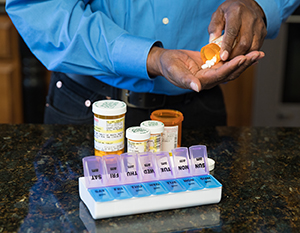
Have a routine for taking your medicine. Take it at the same time each day. A watch with an alarm or a mobile medical app that you can use on your smartphone can help.
-
Some ACE inhibitors should be taken on an empty stomach, 1 hour before a meal or 2 hours after a meal. Follow the instructions from your provider or on the information sheet of your medicine.
-
Don't change the dose or stop taking your medicine unless your health care provider tells you to. It may take a few weeks for you to feel that the medicine is working.
When should I contact my doctor?
Call your health care provider if:
-
You have diarrhea, nausea, vomiting, or you are sweating. These can cause low blood pressure.
-
You have a dry, hacking cough or a sore throat.
-
You feel dizzy or faint, or have a headache.
-
You have any other unusual symptoms.
Tell your provider if you want to become pregnant or think you may be pregnant. ACE inhibitors can cause serious side effects to your unborn child. Your provider can prescribe medicine to replace your ACE inhibitor that may be safer to take while you are pregnant or trying to become pregnant.
Call 911
Call
-
You have trouble breathing or swallowing, or swelling in your face, mouth, lips, arms, lower legs, ankles, or feet. These may be signs of an allergic reaction.
-
You have confusion or lethargy.
Online Medical Reviewer: Callie Tayrien RN MSN
Online Medical Reviewer: Stacey Wojcik MBA BSN RN
Online Medical Reviewer: Steven Kang MD
Date Last Reviewed: 02/01/2025
© 2000-2025 The StayWell Company, LLC. All rights reserved. This information is not intended as a substitute for professional medical care. Always follow your healthcare professional's instructions.
Find a cardiac specialist
Because every beat matters, our cardiac doctors are dedicated to providing care like no other can.
Related Articles
Heart Failure: Making Changes to Your Diet
When you have heart failure, excess fluid is more likely to build up in your body. This makes the heart work harder to pump blood. Controlling the amount of salt (sodium) you eat may help prevent fluid from building up. Read on for some helpful ways to reduce salt.
Angiotensin Receptor Blockers (ARBs)
Angiotensin receptor blockers (ARBs) are medicines. They are most often prescribed to treat high blood pressure, but they can be used to treat other conditions. This sheet tells you how ARBs work and how to use them effectively.
Living with an Implantable Cardioverter Defibrillator (ICD)
Most ICDs are well protected from interference with other electrical devices. But there are some devices and signals that can cause problems. Read on to learn more--and prevent these possible problems.
Taking Amlodipine
Amlodipine is a calcium channel blocker. It helps relax your blood vessels and can lower your blood pressure and relieve chest pain.