After percutaneous coronary intervention (PCI) expect that you’ll need regular follow-up appointments with your healthcare provider. The first appointments just after the procedure will focus on how well you are healing after your angioplasty. Later appointments will look at your overall heart health. They will help you address risk factors for heart disease.
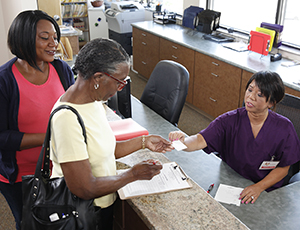
Before you go home, your healthcare team will schedule your first follow-up visit. Be sure your appointment is on a day that you can make it. You may want to arrange for someone to help you get to and from your first follow-up appointment. Follow all of the instructions your provider has given you after your procedure. Call if you have questions.
You’ll see your healthcare provider who did the PCI for your first follow-up visit. This will be about a week after the procedure. This provider will check the site where the catheter was inserted. You may also have tests to check your heart and overall health. Going forward, you may need to see your heart care provider or primary care provider regularly. These visits allow your healthcare provider to track your health. They will help manage your heart disease.
Online Medical Reviewer: Stacey Wojcik MBA BSN RN
Online Medical Reviewer: Steven Kang MD
Date Last Reviewed: 08/01/2023
© 2000-2025 The StayWell Company, LLC. All rights reserved. This information is not intended as a substitute for professional medical care. Always follow your healthcare professional's instructions.
Find a cardiac specialist
Because every beat matters, our cardiac doctors are dedicated to providing care like no other can.
Related Articles
Taking Blood Thinners After Percutaneous Coronary Intervention (PCI)
After PCI, you will need to take blood thinners to prevent blood clots.
Discharge Instructions for Catheter Ablation
This catheter ablation procedure destroyed (ablated) a few of the cells in your heart that were causing your heart rhythm problem. During the procedure, a thin, flexible wire (called a catheter) was inserted into a blood vessel in your upper thigh and threaded up to the heart.
Discharge Instructions for Heart Failure
The heart is a muscle that pumps oxygen-rich blood to all parts of the body. When you have heart failure, the heart is not able to pump as well as it should. Symptoms of heart failure can be controlled by changes in your lifestyle and by following your doctor's advice. Symptoms of heart failure can be controlled by lifestyle changes and by following your doctor's advice.
After Carotid Endarterectomy: In the Hospital
After surgery, you'll be taken to a recovery area. Later, you may be moved to a regular hospital room where you'll stay for 1 or 2 days.