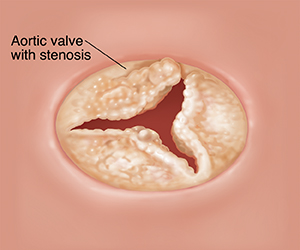
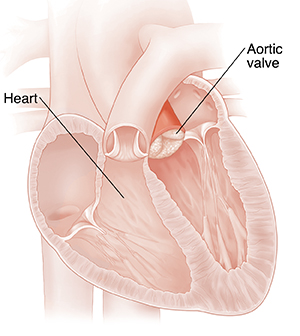
Aortic stenosis means your aortic valve has a problem opening. The aortic valve is one of the heart’s four valves. It's on the left side of the heart. It sits between the left lower chamber (left ventricle) and the large blood vessel that sends blood to the body (aorta). With aortic stenosis, the left ventricle has to work harder to push the blood through the valve. In some cases, this extra work will make the muscle of the ventricle thicken. In time, the extra work can tire the heart and cause the heart muscle to weaken.
Stenosis usually gets worse slowly, over many years. But sometimes, it can quickly get worse.
Possible causes
Calcium deposits can form on the aortic valve as you get older. These deposits make the valve stiff and hard to open. In some cases, you may have been born with an abnormal aortic valve. Or your aortic valve may have been damaged by rheumatic fever or a heart infection. Radiation therapy used as treatment for cancers such as lymphoma, may be a cause.
Treating aortic stenosis
In many cases, treatment won’t be needed unless you have symptoms. If you do have symptoms, medicines may help ease them. If the stenosis is severe, your healthcare provider may advise surgery to replace the valve. Or you may have a catheter-based procedure (transcatheter aortic valve replacement or TAVR) to replace the valve, even if you don’t have symptoms.

Find a cardiac specialist
Because every beat matters, our cardiac doctors are dedicated to providing care like no other can.
Related Articles
Right-Sided Heart Failure
Swelling in the feet and ankles is one of the first signs of right-sided heart failure. Learn how this condition is treated.
What Is Cardiac Asthma?
Cardiac asthma can the same symptoms as true asthma. But the symptoms are caused by heart failure, which leads to fluid buildup in the lungs.
The Cardiologist
A cardiologist is a healthcare provider who has had extra training to treat problems of the heart and blood vessels. These include heart attack and heart failure.
Ventricular Arrhythmia
Sometimes problems with the heart's electrical signals lead to a fast heart rhythm. Too many signals may make the heart beat very fast (tachycardia). Or signals may be sent so rapidly and irregularly that the heart muscle sometimes quivers and doesn't beat at all (fibrillation).