Ejection fraction (EF) is a measurement of how much blood your heart pumps out when it beats. It helps your health care provider diagnose and keep track of heart failure.
Your heart has four chambers. The top two chambers are called the atria. They take blood in from the veins and lungs. The bottom two are called ventricles. They are the pumping chambers of the heart. When your heart beats, the right ventricle pumps blood to your lungs. The left ventricle pumps blood to the brain, heart arteries, and the rest of your body. The EF is the percentage of blood that is pumped out of the left ventricle with each heartbeat. Even in a healthy heart, some blood stays behind in the ventricles.
EFs between 50% and 70% are considered normal for the left ventricle. An EF under or equal to 40% means the muscle is weakened and you may have heart failure. This is called heart failure with reduced ejection fraction. It may also be known as systolic heart failure. In heart failure, the EF number can become very low. An EF of 20% is about one-third of the normal ejection fraction. The heart is not pumping all the oxygen-rich blood the body needs. The blood that is not ejected from the ventricle can back up into the lungs and cause shortness of breath. Over time, this can lead to fluid buildup and swelling (edema) in the belly (abdomen) and legs. Other types of heart failure include heart failure with mildly reduced EF (an EF of 41% to 49%) and heart failure with improved EF (previous EF of less than 40% and a follow-up measurement of an EF greater than 40%).
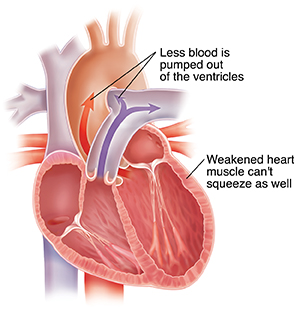
Another type of heart failure is known as diastolic heart failure or heart failure with preserved ejection fraction. Some people have a normal ejection fraction (greater than 50%) but the heart muscle becomes stiff. It doesn’t relax normally between contractions. This leads to increased filling pressures within the heart. EF is often in the normal range. This can lead to fluid buildup in the lungs or other parts of the body.
Your provider can use an echocardiogram or other tests to measure EF and see how well your heart is working. The other tests include cardiac MRI, cardiac CT, cardiac catheterization, and nuclear imaging.
EF is very important. It's one of the most common methods of reporting overall heart function. But it's important to note that some people have heart failure symptoms even with a normal EF. Also, although a low EF is never normal, with treatment some people can lead a fairly normal, active life despite a lower EF.
If the EF drops too low and doesn't respond to treatment, you may need special devices and medicines until another treatment can be done. A heart transplant may also be considered for very severe and refractory heart failure.

Find a cardiac specialist
Because every beat matters, our cardiac doctors are dedicated to providing care like no other can.
Related Articles
Emotional and Family Issues in Children With Heart Disease
A detailed look at the way children may feel about having congenital heart disease, plus some tips for helping them cope.
Ventricular Arrhythmia
Sometimes problems with the heart's electrical signals lead to a fast heart rhythm. Too many signals may make the heart beat very fast (tachycardia). Or signals may be sent so rapidly and irregularly that the heart muscle sometimes quivers and doesn't beat at all (fibrillation).
Right-Sided Heart Failure
Swelling in the feet and ankles is one of the first signs of right-sided heart failure. Learn how this condition is treated.
What Is Cardiac Asthma?
Cardiac asthma can the same symptoms as true asthma. But the symptoms are caused by heart failure, which leads to fluid buildup in the lungs.


