When you first get your tracheostomy (trach) tube, you may have trouble eating and swallowing. Your doctor may refer you to a speech therapist. A speech therapist is an expert trained to help people with swallowing and speech.
Most people are able to go back to their usual eating habits after healing is done and their swallowing is better. Below are tips to help you eat and drink with a trach tube.
Planning meals
-
Follow your diet instructions. Follow all diet directions given by your doctor or speech therapist. For example, you may be told to not have certain foods or drinks that are hard to swallow.
-
Ask how to prep your tube. If you have a cuffed tracheostomy device, ask your doctor if you should deflate it before you eat. Also ask if you should suction your tube before you eat.
-
Eat plenty of fiber. This can help prevent constipation. Constipation can be a problem when you have a trach tube. And because you cannot hold your breath, it can be harder to push so you can poop. Good sources of fiber include whole-grain foods, bran, fruits, vegetables, and beans.
-
Label your food with expiration dates. You may not be able to smell when food goes bad. Your sense of smell may be affected by the tracheostomy. This is because you are mainly breathing through your neck, not your nose.
Safety when eating
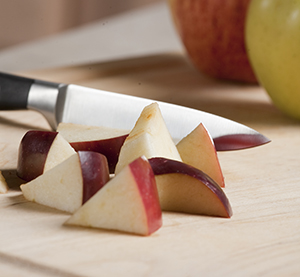
Eat carefully. When eating:
-
Sit up straight.
-
Take small bites.
-
Eat slowly.
-
Chew food well before you swallow.
If you aspirate
If you breathe food pieces into your airway (aspirate), stay calm. Try to suction the food out through your tracheostomy. If you cannot remove the food, call
Drinking fluids
Make sure to drink plenty of fluids. Fluids help keep your mucus thin and prevent mucus buildup. At first, you may be advised to drink thicker fluids, such as liquids with added thickener or blended drinks. These are safer to drink when a person has swallowing problems.
As you get used to the trach tube, you may be able to drink thinner liquids, such as water. Your doctor and speech therapist will tell you how to change the types of fluids and foods for your needs.
Online Medical Reviewer: Callie Tayrien RN MSN
Online Medical Reviewer: Mary Mancini MD
Online Medical Reviewer: Stacey Wojcik MBA BSN RN
Date Last Reviewed: 05/01/2025
© 2000-2025 The StayWell Company, LLC. All rights reserved. This information is not intended as a substitute for professional medical care. Always follow your healthcare professional's instructions.