You may be anxious to go home as soon as possible. Before you and your baby go home, a healthcare provider will make sure that your baby has no health problems. You will also be checked to be sure you are healthy enough to take care of your baby and yourself.
Checking baby’s health
A pediatrician or other healthcare provider will give your newborn a complete examination. All babies are checked to rule out problems, like a dislocated hip or a heart murmur. A few drops of blood will be taken from your baby's heel to check for certain diseases. A hepatitis B vaccine may be given. An antibiotic ointment may be put in your baby's eyes. The healthcare provider will discuss the exam results with you and answer your questions. You may also schedule your baby's first office visit.
When you’re ready
You’re ready to go home when:
-
You can walk to and use the bathroom without help.
-
You have a normal amount of bleeding.
-
You can eat solid food and swallow pain pills.
-
You have adequate pain relief.
-
You have no sign of infection or other health problems, including fever.
If you are concerned that you are not ready to be discharged, be sure to discuss these concerns with your healthcare provider.
Taking baby home
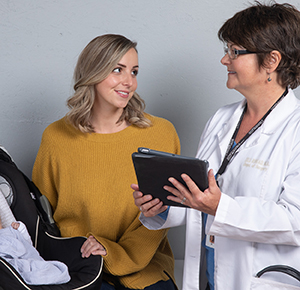
Most often, you and your baby go home together. Your baby is ready to go home when:
-
They have no sign of a health problem.
-
They have had a hearing screening.
-
They have had routine laboratory testing.
-
They are eating well.
-
Their temperature is normal.
-
A government-approved car seat is correctly installed in the car your baby will ride home in.
Online Medical Reviewer: Donna Freeborn PhD CNM FNP
Online Medical Reviewer: Heather Trevino
Online Medical Reviewer: Irina Burd MD PhD
Date Last Reviewed: 03/01/2024
© 2000-2025 The StayWell Company, LLC. All rights reserved. This information is not intended as a substitute for professional medical care. Always follow your healthcare professional's instructions.