When you find out you have cancer, you most likely have questions about treatment.
Radiation therapy uses high-energy X-rays to kill or slow the growth of cancer cells. It can also affect healthy cells nearby and cause side effects that depend on:
-
What type of radiation therapy is done
-
What part of your body receives the radiation
-
How long your treatment lasts
Getting support
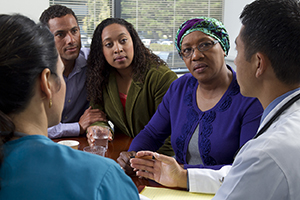
You are not facing cancer treatment alone. Keep a list of any questions you have for your radiation therapy team. Ask these questions during your visits. Call your team if you need to.
You can also get help from:
-
Family members
-
Friends
-
Support groups (in person or online)
-
Counseling
-
Social workers, case managers, or navigators
Talk with your healthcare team if you need a referral to counseling.
Cancer resources
To learn more about cancer and to find support groups, contact the resources below:
-
American Cancer Society at ww.cancer.org or 800-227-2345
-
National Cancer Institute at ww.cancer.gov or 800-422-6237
-
American Society for Radiation Oncology at www.rtanswers.org or 703-502-1550
-
American Society of Clinical Oncology at www.cancer.net or 888-651-3038
Featured in
Online Medical Reviewer: Louise Cunningham RN BSN
Online Medical Reviewer: Richard LoCicero MD
Date Last Reviewed: 08/01/2023
© 2000-2025 The StayWell Company, LLC. All rights reserved. This information is not intended as a substitute for professional medical care. Always follow your healthcare professional's instructions.