Chemotherapy (chemo) is most often given by IV (intravenous) infusion. This is done through a soft flexible tube (catheter) placed in a vein. The most common types of IV treatment are:
-
IV push (IV bolus). This is given over a few minutes. This type of infusion is often done in an outpatient setting. This may be in a hospital, at a clinic, or at your healthcare provider’s office. Sometimes it’s done at home with the help of a visiting infusion nurse.
-
IV infusion. This is given over 15 to 30 minutes up to several hours. It is often done in an outpatient setting. But for some therapies you may need to stay overnight for 1 or more days at the hospital. In some cases, IV infusions may be given at home.
-
Continuous infusion. This type may last for days or weeks at a time. The medicines are given at a rate that is controlled by a small, portable, electronic pump. This is attached to the IV tubing. And it can be worn at home. This lets you have chemo and continue your normal activities at the same time.
Getting ready for your treatment
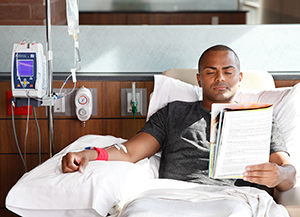
Depending on the type and number of medicines, the length of your IV infusion treatment may range from hours to days. To make this time more pleasant, wear comfortable clothes and bring a comforting blanket. You can also read, or listen to music or programs on portable devices.
Featured in
Online Medical Reviewer: LoCicero, Richard, MD
Online Medical Reviewer: Sather, Rita, RN
Date Last Reviewed: 11/01/2023
© 2000-2025 The StayWell Company, LLC. All rights reserved. This information is not intended as a substitute for professional medical care. Always follow your healthcare professional's instructions.