Good posture protects your back when you sit, stand, and walk. It is also important while sleeping. Keep your ears, shoulders, and hips in line. Try the tips below. Also, be sure to follow any guidelines from your doctor.
If you lie on your back
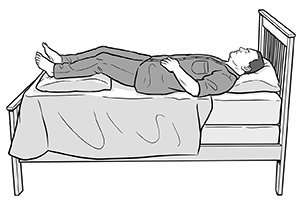
Ask your doctor how firm your mattress should be.
-
Find a position that keeps your back aligned and comfortable.
-
Use a supportive pillow under your head to align your neck with your spine.
-
Place a pillow under your knees, legs, or lower back to keep the natural curve of your lower back.
If you lie on your side
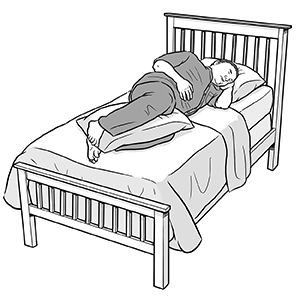
Ask your doctor how firm your mattress should be.
-
Find a position that keeps your back aligned and comfortable.
-
Use a supportive pillow under your head to align your neck with your spine.
-
Bend your knees.
-
Place a pillow between your knees to reduce strain on your hips and spine.
Turning in bed
-
If you change positions, you will need to move your pillows. This can become so natural that you hardly wake up.
-
When you turn in bed, move your whole body as one unit.
-
Tighten your stomach muscles. Bend your knees slightly toward your chest.
-
Roll to one side, keeping your ears, shoulders, and hips in line. Keep a pillow between your legs.
-
Be careful not to bend or twist at the waist.
-
If possible, try not to sleep on your stomach.
Online Medical Reviewer: L Renee Watson MSN RN
Online Medical Reviewer: Raymond Turley Jr PA-C
Online Medical Reviewer: Thomas N Joseph MD
Date Last Reviewed: 05/01/2025
© 2000-2025 The StayWell Company, LLC. All rights reserved. This information is not intended as a substitute for professional medical care. Always follow your healthcare professional's instructions.

