Once you are ready for it, your healthcare provider will help you ease back into your active life. You can do certain exercises to help you build up your agility. Agility is ease and quickness of movement. You may need to use a knee brace while doing some activities.
Ask your healthcare provider if you’re ready to do these exercises. If you do too much too soon, you could cause new knee problems. Or you may even reinjure your knee.
Increasing your agility
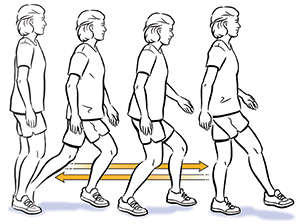
Agility training helps prepare your knee for stops and starts. It also helps with jumping, landing, and changing directions. Keep in mind that your leg must be strong enough to handle this training before you start. Ask your healthcare provider or physical therapist how long to exercise. And be sure to do a variety of workouts. This helps build up all the muscles around your knee:
-
Sideways steps, hops, and shuffles prepare you to go back to sports like skiing and tennis.
-
Short sprints forward and backward help get you ready for stop-and-go activities. These include playing soccer or basketball, or even chasing a toddler.
-
Other exercises help you train for specific activities, such as running. Talk to your healthcare provider.
Returning to favorite activities
Keeping your knee strong and stable is a lifelong commitment. It may take up to a year of steady work to get back the full use of your knee. But as you feel better, you can start doing many of your favorite activities. Just be sure to take it easy at first. You may also need to wear a leg brace for certain sports. For best results, stick with daily workouts for as long as you stay active. And keep doing strength training up to
Online Medical Reviewer: Daphne Pierce-Smith RN MSN
Online Medical Reviewer: Thomas N Joseph MD
Online Medical Reviewer: Trina Bellendir PT
Date Last Reviewed: 09/01/2023
© 2000-2025 The StayWell Company, LLC. All rights reserved. This information is not intended as a substitute for professional medical care. Always follow your healthcare professional's instructions.