Recovery

Post-Hip Replacement: Heel Slides, Abduction, Adduction

Choose a preferred language

The following exercises can be done in bed. Some help improve blood flow. Others help build strength. Your physical therapist or surgeon may give you special instructions. Repeat each exercise  10 times. Do them at least  3 times each day. Count out loud with each exercise to avoid holding your breath.


Heel slides

  • Keep the heel of your operated leg on the bed. Then slide the heel toward your buttocks as far as you comfortably can.

  • Hold for 5 seconds. Then slide your heel back to the starting position.
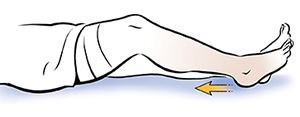
    Leg from knee down showing heel slides.


Abduction/adduction

  • Start with your feet slightly apart. Keeping your knee and foot pointing toward the ceiling, slowly slide your operated leg out to the side.

  • Slide your leg back to its starting position without crossing the midline of your body.
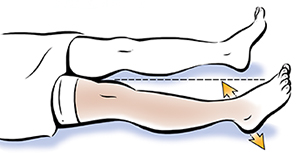
    Legs from waist down showing abduction/adduction.

Online Medical Reviewer: Elizabeth Oswald PT DPT

Online Medical Reviewer: Marianne Fraser MSN RN

Online Medical Reviewer: Trina Bellendir PT

Date Last Reviewed: 04/01/2024

© 2000-2025 The StayWell Company, LLC. All rights reserved. This information is not intended as a substitute for professional medical care. Always follow your healthcare professional's instructions.


Related Articles
Read article
Orthopedics
After Hip Replacement: Sitting Safely

Use these tips to help sit safely after hip replacement.

Read article
Orthopedics
Arthralgia

Arthralgia is the term for pain in or around the joint. It is a symptom, not a disease. This pain may affect 1 or more joints. Here's how to care for yourself at home.

Read article
Orthopedics
Preparing Your Residual Limb for a Prosthesis

Learn what to expect after amputation as you prepare for a prosthesis.

Read article
Orthopedics
Headache After Spinal Tap (No Patch)

If there is a loss of too much spinal fluid from a leak at the puncture site after a spinal tap, the spinal fluid pressure goes down and a headache occurs. This headache may be mild or severe. There may also be dizziness, nausea and blurred vision. Here's what you need to know.

Our orthopedic specialists will get you moving pain-free again.

From orthopedic surgeons to physical therapists, our orthopedic team has been built to provide seamless care and support throughout your whole journey.

Browse our specialists