Dismiss Modal

Treatment

Electrothermal Catheter Therapy: After the Procedure

Choose a preferred language

The procedure is over soon, but you won’t recover overnight. For the first week, you may feel more back pain than usual. This is normal. It may take 6 months or more to reach full improvement of your back pain. Be patient and stick to your treatment plan to make sure you get better.


In the hospital

After your procedure, you’ll be moved to the recovery room. You may stay there for 1 to 2 hours. You’ll be given pain medicine if you need it. You will also be checked to make sure that your legs are not numb or weak. When it’s time for you to leave, you’ll be given:

  • A prescription for pain medicine to take at home

  • Instructions on how to take care of yourself during your recovery

  • A back brace, if needed

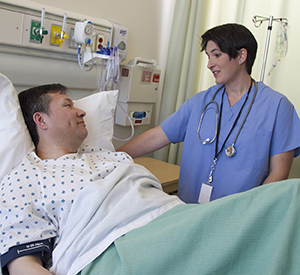
    Healthcare provider talking to man in hospital bed.


At home

For the first 4 weeks:

  • Rest and heal at home.

  • Be careful not to bend or twist.

  • Limit your sitting time as advised by your healthcare provider.

During this time, you will have a follow-up appointment with your healthcare provider. Depending on how your recovery goes:

  • You may start to exercise as directed by your healthcare provider or physical therapist.

  • You may return to work as soon as 4 weeks after the procedure, or as directed by your healthcare provider or physical therapist.


When to call your healthcare provider

Contact your provider right away if you have:

  • Increasing redness or drainage from your needle insertion site

  • Increasing pain, weakness, or numbness in your legs

  • A fever above 100.4°F ( 38°C), or as directed by your provider

  • Loss of bowel or bladder control

  • A severe headache

© 2000-2025 The StayWell Company, LLC. All rights reserved. This information is not intended as a substitute for professional medical care. Always follow your healthcare professional's instructions.


Related Articles
Read article
Orthopedics
Understanding Ankle Fracture Open Reduction and Internal Fixation

Open reduction and internal fixation (ORIF) is a type of treatment to fix a broken bone. It puts the pieces of a broken ankle bone back together so they can heal.

Read article
Orthopedics
Hip Arthroscopy: Repairing Femoroacetabular Impingement

When excess bone forms on the edge of the ball or the socket of the hip, it's called FAI (femoroacetabular impingement). This can cause pain and limit movement. Arthroscopy can fix FAI. It uses small incisions and special tools. Read on to learn more.

Read article
Orthopedics
Cortisone Injections

Injecting cortisone can relieve pain for anything from a sports injury to arthritis.

Read article
Orthopedics
Cervical Epidural Injection: Your Experience

Cervical epidural injection is a treatment for certain types of neck pain. Learn what to expect before, during, and after this treatment.

Our orthopedic specialists will get you moving pain-free again.

From orthopedic surgeons to physical therapists, our orthopedic team has been built to provide seamless care and support throughout your whole journey.

Browse our specialists