A problem with your facet joints can cause pain. This pain may be in your low back, middle back, or neck. If so, a facet joint injection may help. These injections are often used when pain is caused by a condition that gets worse over time (degenerative). And they are often used for arthritic conditions or injury. With this treatment, medicine is injected directly into certain facet joints. It can be done to diagnose an issue. Or it can be done to relieve pain.
What is a facet joint?
Bones called vertebrae make up your spine. Each bone in your spine (vertebra) has flat surfaces (facets) that touch where the bones fit together. These form a structure called a facet joint. This is a small joint located between each vertebra on the back of the spine.
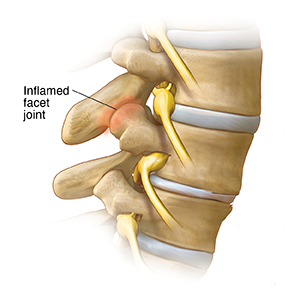
What is a facet joint injection?
One or more facet joints in your back or neck can become swollen and irritated (inflamed). This may cause pain. You may have medicine injected directly into the inflamed joints. This treatment is called a facet joint injection. It may help reduce inflammation. And it may help relieve pain. Pain relief may last for weeks, months, or longer. If the pain returns, you may need another injection.
Getting ready
To get ready for your treatment, do the following:
-
Tell your health care provider what medicines you take. Do this at least 1 week before treatment. This includes prescription and over-the-counter medicines. It includes aspirin as well as vitamins, herbs, and other supplements. Ask if you should stop taking any of them before treatment.
-
Tell your provider if you are allergic to any medicines.
-
Tell your provider if you are pregnant or could be pregnant.
-
Follow any directions you are given for not eating or drinking before the treatment.
-
If asked, bring tests with you on the day of your treatment. This includes X-rays and imaging scans like MRIs.