Fitness
Strength-Training Myths
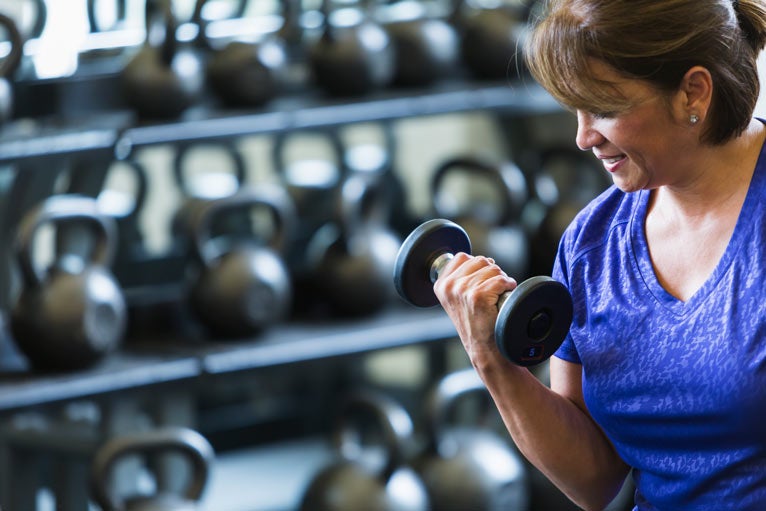
If you haven't started lifting weights, it may be because you have run into some of the myths about strength training. Read on to dismiss these myths and to get the facts about strength training. Taking time each week to build your strength can help you live a more healthy and independent life.
Myth: Strength training is for young people only.
Fact: Nearly everyone can benefit from strength training, including older adults. Older adults who participate in strength-training programs have improved self-confidence and self-esteem, as well as more muscle mass and greater bone density. Besides making you stronger, strength training may help ease arthritis pain, improve heart health, help with weight control, and improve blood glucose control.
Myth: Strength training is for men only.
Fact: It may be even more important for women to strengthen their bones and muscles than it is for men. After menopause, women lose a small percentage of bone mass every year. Strength training can help slow this loss. It helps delay the progression of a disease that causes bones to weaken (osteoporosis). Strength training can also slow muscle loss and improve balance. This can help reduce the risk of falls.
Myth: Strength training is dangerous.
Fact: Strength training is safe as long as it is done correctly. You can learn the correct way to use weights by working with a qualified trainer at a local gym or senior center. As with any new exercise, be sure to talk with your healthcare provider before starting a strength-training program.
Myth: I am too weak for strength training.
Fact: Strength training can be especially helpful if your muscles are weak. It can help make you stronger and improve your balance and flexibility. No matter how weak you may feel, there are strengthening exercises for you. Start with a low weight or even no weight—using your own body for resistance—and slowly build up as you feel stronger.
Myth: Strength training is difficult to learn.
Fact: For most people, free weights and weight machines are not difficult to learn. Work with a trainer or take a class at your gym, senior citizen center, YWCA, or YMCA. Once you are comfortable using free weights, you may want to buy some to use at home.
Author: Turkington, Carol
Online Medical Reviewer: Rajadurai Samnishanth
Online Medical Reviewer: Rita Sather RN
Online Medical Reviewer: Stacey Wojcik MBA BSN RN
Date Last Reviewed: 09/01/2023
© 2000-2025 The StayWell Company, LLC. All rights reserved. This information is not intended as a substitute for professional medical care. Always follow your healthcare professional's instructions.