As Parkinson disease progresses, you may need to make some changes in your daily routine. For best results, plan activities for times you’ll feel your best. Leave plenty of time to complete tasks, and take breaks when you need them. There may come a time when you need extra support, such as using a cane or walker to help with movement. If more help is needed, your healthcare provider may refer you to an occupational therapist. This is a professional who can help you practice tasks of daily living.
Dressing
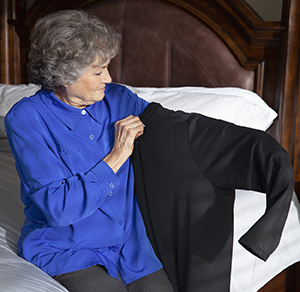
To make dressing easier:
-
Sit down to dress. This helps prevent falls.
-
Choose clothes that are easy to put on and take off. Elastic waistbands and clothes that close in the front are good choices.
-
Add paper clips to zipper pulls. This makes them easier to grasp.
-
Choose shoes that are easy to wear. Wear shoes with hook and loop straps. These may be easier to use than shoelaces. Don't wear high heels.
Bathing and grooming
Loss of muscle control can make bathing and grooming a challenge. Try these tips:
-
Install safety items in the bathroom, such as grab bars, nonslip bathmats, and raised toilet seats.
-
Use a shower chair, if advised.
-
Sit down to brush your teeth, shave, or dry your hair. This helps reduce the risk of falls.
-
Use liquid soap with a pump. Bar soap can be hard to hold.
-
Wear an absorbent robe to dry off if using towels is hard.
Eating and drinking
Try these tips at mealtime:
-
Choose foods that are easy to prepare and eat. Fresh fruits and vegetables make great snacks.
-
Try large-handled forks, spoons, and knives if it’s hard to grip utensils. Spill-proof cups can help with drinking.
-
Tell your healthcare provider if you have any problems swallowing.
-
Eat slowly, taking small bites and small sips to prevent food or liquid from going down the wrong way and ending up in your lungs by mistake. This can cause serious problems, such as pneumonia.
Constipation
Constipation is a very common problem. The tips below can help:
-
Drink plenty of water.
-
Eat foods that are high in fiber, such as fruits, vegetables, and whole grains. A fiber supplement can also help.
-
Get regular exercise.
-
Talk with your healthcare provider about laxatives or stool softeners.
Communicating
Over time, your voice may grow softer and less distinct. Your handwriting is also likely to become small and cramped. These tips can help you cope:
-
Breathe deeply before starting your sentences. Focus on speaking slowly and loudly. If needed, your healthcare provider may refer you to a speech therapist.
-
Add a voice amplifier to your phone. This helps you be heard.
-
Try typing instead of writing. If this is a problem, consider using voice-activated software for computers.
-
Use foam grips on pens and pencils. These can make them easier to hold.
Sleeping
Many people with Parkinson have trouble sleeping. They may also move in their sleep and strike their partners. Tell your healthcare provider if you’re having sleep problems or recurrent nightmares. Medicine can often help you sleep better. Check with your provider before using over-the-counter medicines to help you sleep.
Getting out of bed
You may feel very stiff and slow in the morning. It often helps to take medicines before you get out of bed. Ask your healthcare provider if you can use dissolvable pills or chew pills with water. This can help medicine work faster. Above all, remember to be patient and take your time.
Having sex
Having Parkinson doesn’t mean you can’t have a good sex life. Plan sex for the times of day when you’ll feel your best. Talk with your partner about your feelings. Your healthcare provider can also find ways to help if you’re having problems with sexual function.
When to contact your healthcare provider
Call your healthcare provider right away if any of these occur:
-
Symptoms suddenly get worse
-
Severe constipation
-
Trouble sleeping
-
Problems chewing or swallowing
-
You often can't move your feet or you start to have falls