Dismiss Modal

Symptoms

Normal Breathing During Sleep

Choose a preferred language

When you breathe, air travels through passages in your nose and throat to reach your lungs. When these air passages are wide enough to let air flow freely, you breathe normally.


Nasal structures

The septum is the wall that divides the left half of the nose from the right half. Turbinates are ridges in the nasal passage. They help warm and moisturize air as it flows through the nose.
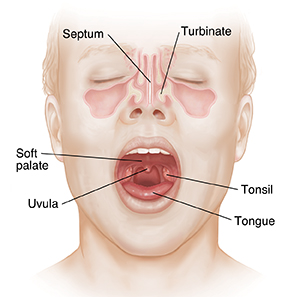
Front of face showing septum, turbinate, and open mouth with tonsil, tongue, uvula, and soft palate.


Throat structures

Air flows past soft, flexible structures where the mouth meets the throat. These structures are the soft palate, uvula, tonsils, and back of the tongue. Throat muscles hold these structures in place. While you sleep, the throat muscles relax a bit. But they normally stay tight enough to keep the airway open.
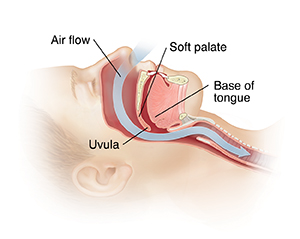
Side view of head with arrow showing path of air through nasal passages into trachea.

© 2000-2025 The StayWell Company, LLC. All rights reserved. This information is not intended as a substitute for professional medical care. Always follow your healthcare professional's instructions.


Find a doctor that's right for you.

From routine check-ups to groundbreaking treatments and beyond, Crestner Health is here to help you live your healthiest life.

Search our doctors
Related Articles
Read article
Wellness
Understanding Restless Legs Syndrome

Restless legs syndrome is a creepy, crawly feeling in the legs. Medications and lifestyle changes can help.

Read article
Wellness
What Is Insomnia?

Learn about insomnia, including common causes and how to work with your doctor to create a treatment plan.

Read article
Wellness
Treating Insomnia

Good sleeping habits are a key part of treatment. If needed, some medicines may help you sleep better at first. Making healthy lifestyle changes and learning to relax can improve your sleep. Here's what you need to know.

Read article
Lung Health
What Are Snoring and Obstructive Sleep Apnea?

Snoring can be a sign of obstructive sleep apnea. This can occur from large throat structures and other problems that block air passage.