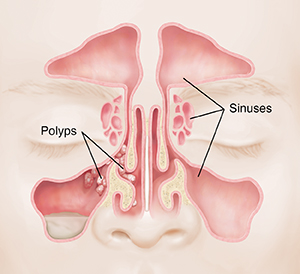
Nasal polyps are abnormal, soft growths in the nose or sinuses. They are swollen bulbs of inflamed tissue, along the nasal lining. Nasal polyps are fairly common, especially as you get older. Polyps can cause symptoms, such as:
-
A stuffy nose (nasal congestion).
-
Long-term (chronic) inflammation of the nose and sinus cavities (called rhinosinusitis).
-
A runny nose.
-
Feeling of fullness in your facial sinus, but often no pain.
-
Postnasal drip.
-
Reduced smell.
-
Feeling blocked in your nose and needing to breathe through your mouth.
Nasal polyps may be diagnosed by physical exam. Your doctor may check for them by putting a thin tube with a camera (nasal endoscope) into your nose. This gives a detailed view of your nose and sinuses. Or you may have a CT scan.
Types of treatment
Treatment is done to reduce inflammation and the size of your polyps. Treatment often starts with steroid medicine inhaled through the nose. This can reduce the inflammation in your nose. If this doesn’t work, you may need to take steroid medicine by mouth.
Other treatments for nasal polyps include:
-
Antileukotriene medicine to help reduce inflammation.
-
Antibiotics to help reduce polyp size.
-
Nasal steroid sprays.
-
Rinsing the sinuses daily with a saltwater solution.
-
Antihistamines to reduce allergic reactions.
-
Allergen immunotherapy and removing allergens, if possible.
-
Aspirin desensitization therapy, if needed.
-
Biologic medicines, such as dupilumab.
You may still have symptoms even with treatment. If this is the case, you may need surgery to remove the polyps. This makes most symptoms go away. But polyps may return in a few months or a few years. It's important to treat the cause of your polyps to help prevent them from growing back. After surgery, you may need to take inhaled nasal steroids to help keep the polyps from coming back.
Possible complications of nasal polyps
Sinus infection is a common complication of nasal polyps. These infections may come back often and become chronic. If you get a bacterial infection, you may need treatment with antibiotics.
In rare cases, nasal polyps can lead to serious infections, such as:
-
Infection of the tissue around the brain and spinal cord (meningitis).
-
Infection around the tissue around the eye (orbital cellulitis).
-
Infection of the sinus bones (osteitis).
Your doctor will watch your symptoms carefully to make sure you don’t have these infections. If you do, you might need antibiotics. In very rare cases, you may need surgery. If medicines are prescribed, take them as advised until they're gone. Keep all follow-up appointments.
Very large nasal polyps may block your nasal airways during sleep. This leads to obstructive sleep apnea, a condition where lack of oxygen wakes you up many times a night without you knowing it. This can make you very tired during the day. Let your doctor know if you often feel tired.
When to contact your doctor
Contact your doctor right away if you have:
-
Symptoms that don’t get better after several days of treatment.
-
Abnormal vision.
-
Swelling around your eyes.
-
Confusion or loss of alertness.
-
New nasal symptoms.