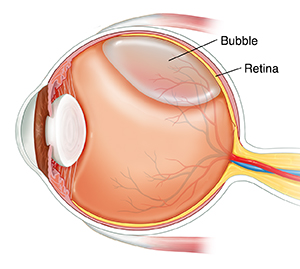
Pneumatic retinopexy is a procedure to repair a detached retina. It helps to bring back vision. It uses a special tool to repair the retina and a small bubble of gas to hold the retina in place so it can heal.
What is a detached retina?
The retina is a very thin layer of cells at the back of your eye. These cells detect light and send visual information to your brain. Retinal detachment is when your retina pulls away from the inner wall of your eye. When that happens, your retina doesn’t work normally. If not treated right away, it can cause permanent loss of eyesight.
You may have symptoms, such as new floaters. These look like little specks or cobwebs that float in your field of vision. These floaters can be so dense that they impair your vision. You might also have light flashes in your eye or a curtain over your field of vision.
Why a pneumatic retinopexy is done
The procedure is done to reattach the retina. This lets the flow of blood come back to that part of your eye and restore vision. There are several treatment choices for a detached retina. Pneumatic retinopexy is one choice, and it may have a lower risk for problems than the other choices. It may not be the right treatment if you have a complex tear, or if your tear is on the lower part of your eye.
How pneumatic retinopexy is done
Eye drops will be used to dilate your pupil. It will stay dilated for several hours after the procedure. Your eye care provider may use a syringe to remove some fluid from inside your eye. They will inject a gas bubble into your eye. This is done in combination with laser surgery or a freezing treatment (cryotherapy).
Risks of pneumatic retinopexy
All procedures have risks. The common risks of this procedure include:
-
Fluid trapped beneath your retina
-
Gas trapped beneath your retina
-
A scar on or under the retina (proliferative vitreoretinopathy)
Some of the less common risks are:
-
Folds in your retina
-
Inflammation in the eye
-
Increase in eye pressure
-
Bleeding in the eye
-
Detachment of the layer beneath the retina
-
New retinal tears
-
Return of the original tear
-
Need for a repeat procedure or surgery
Your risks may differ according to your age, your general health, and other factors. Ask your healthcare provider which risks apply most to you.