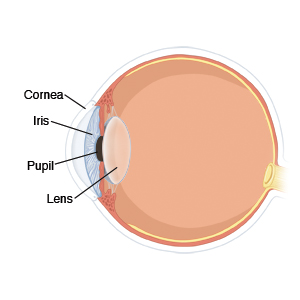
The cornea is the clear part in the front of the eye. A corneal ulcer is an open sore on the cornea.
The most common cause of a corneal ulcer is infection by bacteria, virus, or fungus. A scratch to the cornea that becomes infected can lead to a corneal ulcer. Using contact lenses increases the risk of a corneal ulcer from a bacterial infection. This can happen especially if contact lenses are not kept clean or are worn while sleeping. Chemical injury to the eye is another risk factor for a corneal ulcer. Any condition that causes dry eyes will increase the risk of a corneal ulcer. This includes things such as decreased tear production or not being able to blink normally.
A corneal ulcer may cause redness, pain, increased tears, and pus or mucus draining from the eye. Your vision may be blurry. The eyelid may swell.
Corneal ulcers are very serious. They may cause long-lasting (permanent) eye scarring, with partial or complete blindness. So this condition must be recognized and treated very carefully. With proper treatment, corneal ulcers should improve in 2 to 3 weeks. Following up with a doctor who specializes in eye care (an ophthalmologist or optometrist) is very important.
Home care
-
Don’t wear contact lenses until approved by your eye doctor.
-
Don’t sleep in contact lenses.
-
Don’t soak contact lenses in anything other than sterile solution specifically made for contact lenses.
-
Be very careful not to put anything in your eye except for eye drops instructed by your eye doctor, including tap water
-
Apply a clean, cool compress to the eye (towel soaked in cool water).
-
Don’t touch or rub your eye with your fingers.
-
Wash your hands often to prevent the infection from spreading to the other eye.
-
You may use acetaminophen or ibuprofen to control pain, unless another pain medicine was prescribed. Talk with your healthcare provider before using these medicines if you have chronic liver or kidney disease. Also talk with your provider if you have ever had a stomach ulcer or digestive bleeding.
-
Use prescribed antibiotic eye drops or ointment exactly as directed. Do not put anything in your eye except for eye drops as instructed by your healthcare provider. Never put tap water in your eyes.
Follow-up care
Follow up with your eye doctor in 1 to 2 days, or as advised.
When to seek medical advice
Call your healthcare provider right away if any of these occur:
-
Worsening vision
-
Increasing pain in the eye
-
Increased discharge from the eye
-
Increased redness of the eye
-
Fever of 100.4°F (38ºC) or higher, or as directed by your healthcare provider