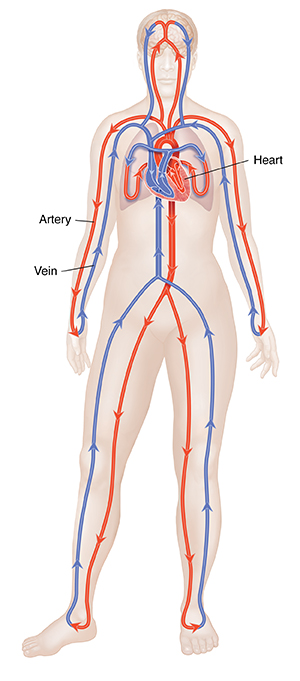
Blood flows from the heart to the body and back to the heart. This nonstop flow is called circulation. Blood flows through blood vessels. These are hollow muscular tubes. There are 3 main types of blood vessels:
-
Arteries carry oxygen-rich blood away from the heart.
-
Veins return oxygen-poor blood to the heart.
-
Capillaries are tiny blood vessels that connect arteries and veins. Capillaries have thin walls that let oxygen and nutrients pass through them to your body parts. They also allow waste products to move from your body parts to the blood.

Find a cardiac specialist
Because every beat matters, our cardiac doctors are dedicated to providing care like no other can.
Related Articles
Discharge Instructions: Caring for Your Central Line
You are going home with a central line. This is a tube put in a vein that leads to your heart. It provides medicine during your treatment. Because a central line has a high infection risk, you must take extra care. This sheet will help you remember what to do at home.
Orthostatic Low Blood Pressure (Hypotension)
Learn about orthostatic hypotension, and care and treatment for this condition.
Surgery for Abdominal Aortic Aneurysm
During surgery for abdominal aortic aneurysm, the weakened aortic wall is replaced with a hollow man-made tube (a graft).
Low Blood Pressure, All Causes
Learn about the causes of low blood pressure and how to care for yourself at home when you have low blood pressure.