Cardiac rehabilitation (cardiac rehab) is a professionally supervised program designed by your healthcare team. It'll help you recover from your heart problem and reduce your risk of future heart problems. You may be helped by cardiac rehab if you have certain heart conditions or certain heart procedures. These include:
-
Stable angina
-
Heart attack
-
Stable heart failure
-
Coronary artery bypass surgery
-
Heart valve surgery
-
Angioplasty with or without a stent
-
Heart-lung transplant
Along with a tailored exercise program, cardiac rehab provides education and counseling to improve health. The cardiac rehab program includes:
-
An assessment of your health
-
Managing your risk factors such as high cholesterol, high blood pressure, and diabetes
-
Education on diet and medicines
-
Exercise training
-
Losing weight
-
Quitting smoking
-
Emotional aspects such as stress, anxiety, or depression
It's important to talk with your healthcare provider about the health benefits of enrolling in a cardiac rehab program.
Your rehab program
Your cardiac rehab program may start while you’re still in the hospital. After you leave the hospital, you may go to a facility for rehab classes. You’ll regain some strength and learn how to exercise safely. Once you do that, your healthcare provider may prescribe an exercise program for you to do at a gym or at home.
As an inpatient
You may start light exercise within
As an outpatient
As early as
-
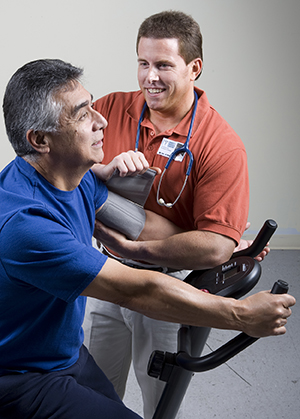
Exercises will be prescribed to help you build strength and movement. The first month will most likely include easier exercises. Over time, you’ll exercise harder to improve your endurance.
-
Your heart, oxygen saturation, and blood pressure may be watched as you work.
-
Cardiac rehab programs are tailored to meet your needs. Some people may take part in the program for 6 weeks, while others will do it for 6 months or longer.
-
Some people may not have access to a facility-based cardiac rehab. Home-based cardiac rehab is considered in some cases for some people. Virtual programs may also be available. Ask your healthcare provider if these are an option for you.
Maintain the benefits to your health
Don’t stop once you’ve finished your program! Make what you learned in rehab a regular part of your life. Here are some tips:
-
Work out at home or at a gym. Try watching a new workout video each week. Take an exercise class. Find something that keeps you interested.
-
Ask family and friends to help you stay motivated. The healthy lifestyle changes can benefit them as well by partnering up and working out together.
-
Make other lifestyle changes to improve your heart and overall health. Quit smoking. Make changes to lower your stress. Lose excess weight. And lower your blood pressure and cholesterol.
-
It's important to keep an open conversation with your healthcare provider about your progress and goals.

Find a cardiac specialist
Because every beat matters, our cardiac doctors are dedicated to providing care like no other can.
Related Articles
Your Heart Risk Action Plan
Learn how to manage your risk factors for heart attack.
Living with a Pacemaker
You can usually do almost everything you did before you got your pacemaker. See your doctor regularly to help ensure that you remain healthy and feeling good. Here are some things to avoid.
Event Monitor
An event monitor is a portable device used to record your heart's electrical activity when you have symptoms. It records the same information as an electrocardiogram (ECG), but for longer durations of time. Most of these devices can send the recorded information directly to your healthcare provider. This allows him or her to analyze the electrical activity of your heart while you are having symptoms.
Medicines for Cardiomyopathy
Medicines can help you feel better and stay as healthy as you can. Take your medicines exactly as instructed. Never stop taking medicines or change dosage unless told to by your doctor, even if you feel better. Here are some capsule definitions of medicines that might be prescribed.