Transmission-based precautions help prevent the spread of certain infections by focusing on preventive strategies based on the mode of transmission (such as through air or contact). Contact precautions are one type of transmission-based precaution. Always use contact precautions in addition to standard precautions.
When to use contact precautions
Most germs are spread through touch. They are often spread by hands. They can also be spread by patient care equipment and other objects. Use contact precautions with patients known to have or suspected of having certain infections as outlined by your facility, including:
-
Scabies and other skin infections
-
Respiratory syncytial virus (RSV)
-
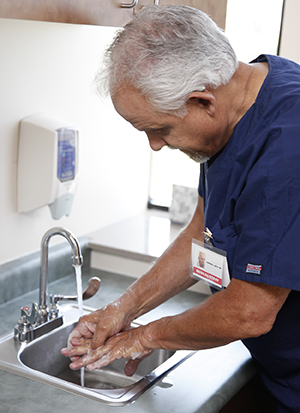
Clostridium difficile infection. Note that contact precautions for C. difficile require vigorous handwashing with soap and water because alcohol-based hand disinfectants aren't as effective against C. difficile spores.
-
Other diarrheal illnesses, such as suspected norovirus or rotavirus
-
Open, draining wounds, such as abscesses or fistulas
-
Varicella (chickenpox)
-
Herpes simplex virus (HSV)
-
Coronaviruses
-
Multidrug-resistant bacteria, such as MRSA and gram-negative organisms
-
Conjunctivitis (acute viral, pink eye)
-
Hepatitis A
How to use contact precautions
The infected patient should be given a private room and bathroom. If this can’t be done, check with your facility’s infection control department. Also:
-
Put gloves on before entering the room.
-
Change your gloves if they have touched body fluids or substances. Remove gloves and wash your hands before leaving the patient’s room.
-
Wear a gown when working directly with the patient or if your clothing will touch surfaces or other objects in the room. Remove personal protective equipment (using proper protocol) before leaving the room.
-
Have family members and other visitors wear a gown and gloves as outlined by your facility.
-
Transport the patient only when necessary. Change the patient’s gown and linens before moving the patient. If you must move the patient, make sure that the infected area is covered. Alert the receiving department.
Preventing contamination
-
Change gloves as soon as possible after they become contaminated. Change them before you go on to another task.
-
Avoid touching objects, surfaces, or the patient with contaminated gloves or other contaminated objects.
-
Avoid sharing patient care equipment. Use disposable patient care equipment if possible. If an item must be shared, clean it with disinfectant between patients.
-
Help patients wash their hands as often as possible.
-
Clean all surfaces in the patient’s room and bathroom daily with approved disinfectant.
-
Remove gloves and other personal protective equipment (using proper protocol) before leaving the room.
-
Clean hands with soap and water or alcohol-based products after touching a patient or surroundings. Alcohol-based hand products are generally effective. Be sure the sanitizer contains at least 60% alcohol. To prevent the spread of C. difficile, you should wash your hands with soap and water.