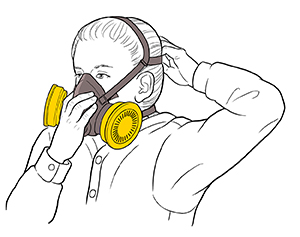
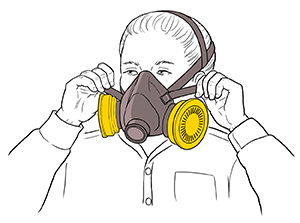
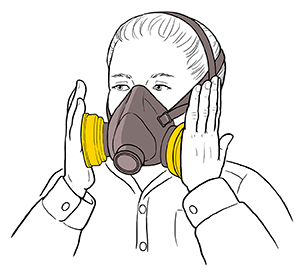
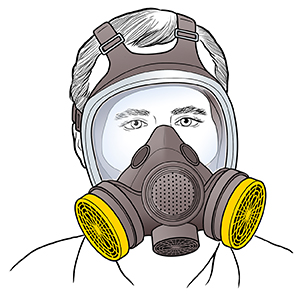
Respirators that cover the nose and mouth are called half-mask respirators. Those that cover the face, including the eyes, are called full-face respirators. Both types use any mix of prefilters, filters, and cartridges. The type of filter or cartridge needed depends on the hazard.
Warning
Don't wear a half-mask or full-face respirator if you may be exposed to gases and vapors that your cartridge can't protect you against. Also, don't wear it in places without enough oxygen or other situations that are immediately dangerous to life or health (IDLH).
How to care for them
Take out the filters and cartridges. Then wash respirators in warm water with a mild soap. Or follow instructions from your employer or the manufacturer. Rinse in water. Then dry with a lint-free cloth or let it air-dry. Put the respirator in a bag. Store it in a cool, dry place. Replace filters and cartridges as directed by your employer or the manufacturer.
Online Medical Reviewer: Andrew D Schriber MD
Online Medical Reviewer: Raymond Kent Turley BSN MSN RN
Online Medical Reviewer: Rita Sather RN
Date Last Reviewed: 02/01/2025
© 2000-2025 The StayWell Company, LLC. All rights reserved. This information is not intended as a substitute for professional medical care. Always follow your healthcare professional's instructions.

