Maintenance-free respirators are one of the most common types. You don't clean or maintain these respirators after use. You simply throw them away. They are worn to capture particles. But they also may guard against nuisance odors (smells that are unpleasant, but not dangerous).
Don't wear a maintenance-free dust mask to protect against gases and vapors.
Also don't wear the maintenance-free dust masks for "Immediately dangerous to life or health" (IDLH) settings. These include areas with oxygen deficiencies or highly concentrated hazards.
How maintenance-free respirators work
A maintenance-free respirator (also called a disposable respirator or a dust mask) is a simple filtering device. It fits over the nose and mouth. The mask then traps particles as you inhale. Some may have an exhalation valve to help ease breathing. These respirators are best for tasks that have a low to moderate hazard, such as:
-
Woodworking
-
Sanding
-
Insulating
-
Sweeping
-
Mixing
How to put them on
The steps below will help you put your respirator on the right way. To work, a respirator must fit snugly around the mouth and nose. These respirators need "fit testing" to make sure of a correct fit. This includes following instructions before general use. Facial hair, dentures or other dental work, skin problems, and glasses can prevent correct fitting. Talk to your supervisor if you can't get a good fit.
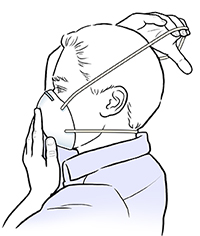
Step 1
Place the mask over your mouth and nose. Position the lower strap first, then the upper strap.
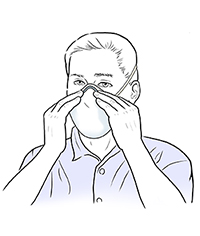
Step 2
Gently press the nose seal so it molds to your face. Don't pinch it sharply.
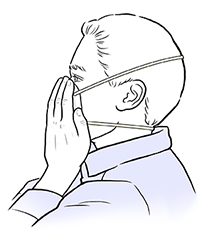
Step 3
Cup both hands over the mask and exhale. If no air leaks out, you have a tight seal.
When to replace them
Replace a maintenance-free respirator if its inside gets exposed to hazards. Also replace after 1 use or according to the guidelines of your employer or the manufacturer.
Online Medical Reviewer: Chris Southard RN
Online Medical Reviewer: Marianne Fraser MSN RN
Online Medical Reviewer: Vinita Wadhawan Researcher
Date Last Reviewed: 10/01/2024
© 2000-2025 The StayWell Company, LLC. All rights reserved. This information is not intended as a substitute for professional medical care. Always follow your healthcare professional's instructions.