After surgery, you will wake up in a recovery area. At first, you’ll likely feel groggy and thirsty. An I.V. (intravenous) line gives you fluids and medicines to relieve pain. Monitors will keep track of your breathing and heartbeat.
You may have a tube coming out of your chest to drain fluid or air. The chest tube may be taken out just after surgery. Or it may stay in place for several days.
Recovering in the hospital
While in the hospital, you’ll work with a respiratory therapist. They will teach you breathing exercises. These help keep your lungs clear and prevent inflammation and infection. You’ll do these exercises every hour or so.
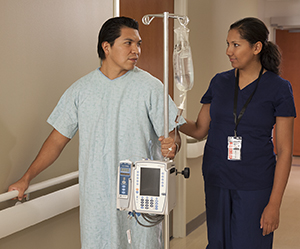
Depending on your condition, a nurse or therapist will help you get up and walk soon after your surgery. This keeps your blood moving and will help improve your healing. The hospital stay after your surgery will generally be
Recovering at home
At home, follow the instructions you are given about how to care for your incisions and lungs. Also:
-
Take your pain medicines as prescribed. This helps relieve soreness and makes activity and deep breathing easier.
-
Walk to keep your blood moving and strengthen your muscles. But don't do strenuous activity, heavy lifting, or drive for a few weeks.
-
Continue to do the breathing exercises taught to you by your therapist.
-
Ask your health care provider when it's okay for you to have sex.
-
Ask your care team when you can go back to work.
-
Follow up with your provider. They will monitor your healing and discuss the results of the procedure.
When to contact your doctor
Contact your health care provider if you have:
-
An incision site that is very red, warm, smells bad, leaks fluid, or is increasing in pain.
-
A fever of
100.4 °F (38° C) or higher, or as directed by your provider. -
Slight bleeding from the incision sites that stops on its own, or with pressure.
Call 911
Call
-
Shortness of breath
-
Dizziness or lightheadedness that continues even after sitting down
-
Sudden, sharp chest pain that doesn't go away, or unusual chest pain
-
Coughing up bright red blood
-
Large amount of bleeding from the incision sites, or bleeding that continues after pressure is applied