Hypersensitivity pneumonitis is lung inflammation caused by inhaling allergens in your environment. Allergens may be things, such as molds, fungus, bacteria, dust, or chemicals. Exposure to the allergens triggers the immune system, which leads to inflammation. This can make it hard to breathe. It can also cause permanent lung damage. Recognizing allergens and treating this condition early can reverse the inflammation in the lungs and help prevent permanent lung damage or other long-term problems.
What causes hypersensitivity pneumonitis?
Hypersensitivity pneumonitis is caused by repeated and prolonged exposure to allergens in the environment. Exposure often occurs at home or in the workplace. But not everyone exposed to these substances gets hypersensitivity pneumonitis.
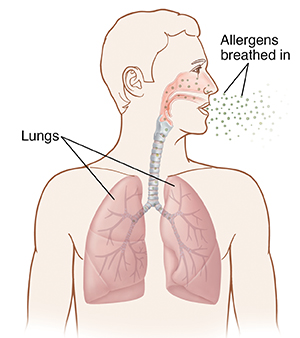
Allergens include:
-
Bacteria
-
Mold
-
Fungi
-
Chemicals
-
Proteins
These allergens can be found in the environment in things, such as:
-
Farming, vegetable, and dairy cattle workers
-
Bird and poultry handlers
-
Animal handlers and veterinarians
-
Grain and flour processors
-
Lumber and construction workers
-
Workers in plastics and electronics industries
-
Textile workers
Symptoms of hypersensitivity pneumonitis
Symptoms can develop 4 to 6 hours after exposure. But it can take several months to years to develop an allergy to the substance. Early symptoms are flu-like and include:
-
Trouble breathing and shortness of breath
-
Cough
-
Tight chest
-
Fever
-
Chills
-
Tiredness
-
Muscle aches
Later symptoms include weight loss, chronic bronchitis, signs of lung scarring, and clubbing of fingertips or toes.
Treatment for hypersensitivity pneumonitis
This disease can be completely reversible if diagnosed or found in its early stages. Ideally, you should stay away from the dust or allergen. If you can’t do that, ask your healthcare provider about wearing a respirator.
Your healthcare provider may prescribe:
-
Steroids to reduce inflammation
-
Immune suppressing medicines
-
Oxygen therapy
-
Bronchodilators to relax the airways
Possible complications of hypersensitivity pneumonitis
If this condition is not treated, you can develop:
-
Permanent lung scarring (pulmonary fibrosis)
-
High blood pressure in the lung arteries (pulmonary hypertension)
-
Heart failure
Living with hypersensitivity pneumonitis
Once diagnosed with hypersensitivity pneumonitis, it’s key to stay away from the substance that is irritating your lungs. These steps can help reduce the inflammation in the lung that can lead to permanent scarring:
-
Be sure to have any standing water inside or outside your home removed.
-
Keep humidity inside your home or workplace below 60%.
-
Have your air conditioning and heating systems checked regularly.
-
Have any water damage in your home repaired as soon as possible.
Other important lifestyle steps include:
-
Get regular medical care. Keep all appointments with your healthcare provider.
-
Quit smoking. Some studies suggest smoking can make the disease worse. Ask your healthcare provider about resources to help you quit.
-
Stay on top of your mental health. Having a chronic disease can take its toll without good support.
-
Keep up-to-date on vaccines recommended by your provider, including a yearly flu shot and pneumococcal vaccine.
-
Get regular physical activity with your healthcare provider's OK.
When to call your healthcare provider
Call your healthcare provider right away if any of the following occur:
-
Fever of 100.4°F (38°C) or higher, or as directed by your healthcare provider
-
Chills
-
Chest tightness
-
Cough
-
Shortness of breath