The shoulder is your body’s most flexible joint. It lets the arm move in almost any direction. But this flexibility has a price—it makes the joint prone to injury. If you have a shoulder problem, a surgical procedure called arthroscopy may be able to help.
Your orthopaedic evaluation
Your healthcare provider will ask about your symptoms and the history of your shoulder problem. They will examine your shoulder and may give you tests, such as an X-ray, CT scan, or MRI. These help your healthcare provider find the cause of your shoulder problem.
Arthroscopy: Looking inside your joint
Arthroscopy is a procedure that allows your surgeon to see and work inside your shoulder joint. Your surgeon makes small incisions in your shoulder and inserts a long, thin, lighted instrument, called an arthroscope.
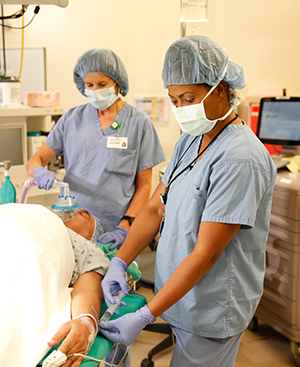
During surgery, the arthroscope sends live video images from inside your joint to a screen that your surgeon views. Using these images, your surgeon can diagnose and treat your shoulder problem. Because arthroscopy uses much smaller incisions than open surgery, recovery is often shorter and less painful. You will get anesthesia so you don't feel the arthroscopy. The anesthesia may be regional, general, or a combination.
Risks and possible complications of shoulder arthroscopy
-
Stiffness or ongoing pain in your shoulder
-
Bleeding or blood clots
-
Infection
-
Damage to nerves or blood vessels
You may still need open surgery after having arthroscopy.
Online Medical Reviewer: L Renee Watson MSN RN
Online Medical Reviewer: Raymond Turley Jr PA-C
Online Medical Reviewer: Thomas N Joseph MD
Date Last Reviewed: 12/01/2022
© 2000-2025 The StayWell Company, LLC. All rights reserved. This information is not intended as a substitute for professional medical care. Always follow your healthcare professional's instructions.