Your acne treatment will work best if you follow your treatment plan. Be patient. Acne often takes months to improve, not days or weeks. Ask your health care provider when you can expect your skin to look better. If you don’t see results by your goal date, call your provider. They may want to give you some other type of treatment.
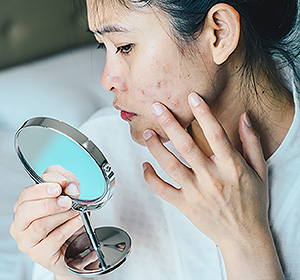
Using skin care products and cosmetics
Besides following your treatment plan, take care in choosing skin care products and cosmetics. The following tips may help:
-
Choose gentle, oil-free soaps and facial cleansers.
-
Don't use harsh acne scrubs, cleansers, or astringents. They can irritate your skin and make acne worse.
-
Ask your health care provider before buying over-the-counter acne treatments. Some of these, such as those with benzoyl peroxide or salicylic acid, can work. But they often have side effects, such as skin getting too dry with treatments that are too strong.
-
Read labels on makeup and moisturizers. Choose those that are water based and oil free. Look for the term noncomedogenic. It means that the product won’t clog your pores.
Caring for your skin
The right skin care routine can help keep your skin healthy. To take good care of your skin, try these tips:
-
Gently wash affected skin twice a day with a mild cleanser. Using your fingertips, smooth the cleanser over your skin. Rinse your skin well. Pat it dry.
-
If your health care provider has approved any over-the-counter acne medicine, use as directed. Use it after you wash your skin. Apply the medicine to all areas where you get acne. Don’t just treat acne you can see now. New blemishes may be in progress but not in view yet. Treat all the skin.
-
Don’t squeeze or pick blemishes. Acne blemishes may heal on their own. But squeezing can cause scarring. Scars will remain after acne blemishes heal.
-
Using sponges, brushes, or other abrasive tools to clean your skin can irritate the skin. Don't use them.
-
If you use soft sponges or cloths to apply makeup, keep them clean.
-
Try not to touch your face.
-
If possible, don't wear clothing or equipment that blocks or rubs the skin with acne.
Getting good results
Learning more about acne is the first step toward controlling this condition. Acne that’s being treated often gets worse at first before it improves. But with correct treatment and skin care, you can manage your acne and feel better about your skin.