Dressing your incision helps keep it clean, dry, and infection-free. That way, it will heal faster. Follow the steps below, whether dressing the incision yourself or with the help of a family member or other caregiver.
Step 1. Wash your hands and set up
-
Use liquid soap. Lather and scrub vigorously for at least 20 seconds. Scrub between your fingers and under your nails.
-
Rinse with clean, running water, keeping fingers pointing down. Use a clean paper towel to dry your hands and turn off the faucet.
-
If soap and water aren't available, it's okay to clean your hands with an alcohol-based hand sanitizer that contains at least 60% alcohol.
-
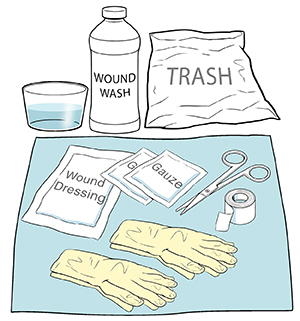
Put all your supplies on a clean cloth or paper towel. Open a plastic trash bag.
-
Peel back the edges of the dressing packages. Pour any irrigation solutions into solution cups.
-
Clean the scissors with soap and water. Cut each piece of tape
4 inches longer than the dressing.
Step 2. Remove the old dressing
-
Put on new disposable medical gloves.
-
Loosen the tape by pulling gently toward the incision. Remove the dressing one layer at a time. Put it into the plastic bag.
-
Remove your gloves, and put them in the plastic bag. Wash your hands again, as described above. Then put on new gloves.
Step 3. Clean and dress the incision
-
Clean the incision and apply a new dressing as directed.
-
Put all used supplies in the plastic bag.
-
Remove your gloves last, and put them in the bag.
-
Seal the bag, and put it in the trash.
-
Be sure to wash your hands again.
When to call a doctor
Contact your health care provider or seek medical care right away if:
-
Your incision suddenly opens.
-
You have bleeding from the incision or an increase in its size.
-
You have increased redness, swelling, or drainage.
-
You have pain in or around the incision.
-
There's a change in the color of the incision.
-
You have a fever of
100.4 °F (38 °C ) or higher, or as directed by your health care provider. -
You have chills.
Featured in