An epididymectomy is a surgery to remove the epididymis. An epididymis is a tube that holds sperm. You have two of these tubes, one in the back of each testicle.
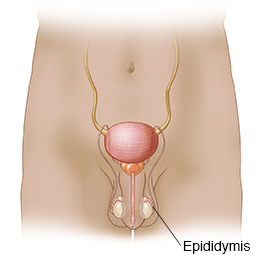
How to say it
ehp-ih-dihd-uh-MEHK-tuh-mee
Why epididymectomy is done
You may need this procedure for a number of reasons. These include:
-
An injury to the groin area
-
An infection or pus-filled lump (abscess) in the epididymis that is hard to treat
-
A tumor or large fluid-filled sac (cyst) in the epididymis
-
Long-term (chronic) pain, such as after a vasectomy
How epididymectomy is done
This procedure is often done on an outpatient basis. That means you can go home afterward. During the procedure:
-
You are given medicine to make you drowsy or fall asleep. You won’t feel pain.
-
The surgeon makes a cut (incision) into your scrotum. They find the epididymis.
-
The surgeon removes part or all of the epididymis.
-
The surgeon closes up the incision with stitches (sutures) or surgical glue.
Risks of epididymectomy
-
Bleeding
-
Infection
-
Pain
-
Being unable to have children (infertility)
-
Damage to a testicle or blood supply to the testicle
Featured in
Author: Semko, Laura
© 2000-2025 The StayWell Company, LLC. All rights reserved. This information is not intended as a substitute for professional medical care. Always follow your healthcare professional's instructions.

