Having your toddler ride with you on a bicycle can introduce them to the joys of bike riding. But there are safety issues you should know about.
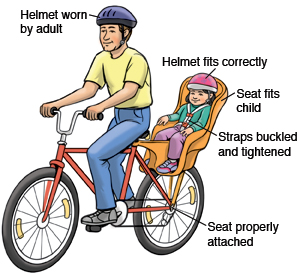
Types of bike passenger seats
There are 2 main types of passenger seats: rear-mounted (over the rear wheel) and bicycle-towed trailers. Whichever seat you choose, make sure it is appropriate for the age and size of your child. And be sure to follow the manufacturer’s instructions when installing and using the seat. Here are more tips for each type of seat:
-
Bicycle-towed child trailer:
-
Be aware that trailers are lower to the ground than rear-mounted seats, so they may be safer. Bicycle-towed trailers are a safer alternative to rear-mounted seats.
-
Make sure the trailer has a sturdy harness.
-
Attach a safety flag to the trailer to make the trailer more visible to drivers.
-
Be sure to use a trailer made for towing behind a bike. Don't attach a stroller or other vehicle to your bike.
-
-
Rear-mounted seat:
-
Choose a seat with a high back, a sturdy shoulder harness, and a lap belt. These help support a sleeping child.
-
Attach the seat securely to the bicycle.
-
Use spoke guards to keep your child’s feet or hands from being caught in the wheel.
-
Safety tips for taking your child as a bike passenger
Suggestions for keeping your child safe:
-
Wait until your child is at least 1 year old before having them ride as a bike passenger. Before that age, children don’t have the neck strength needed to wear a helmet or handle bumps from the road. If you have questions, talk to your healthcare provider.
-
Have your child wear an appropriate helmet (see box below). This should be done even when using a bike trailer.
-
Make sure the child rides only with an adult.
-
Don't ride on busy roads. Stay in low-traffic areas, such as parks, bike paths, and quiet streets.
-
Be aware that the extra weight of the passenger makes the bike less stable. Ride slowly and allow for increased braking time.
Bicycle helmets
One of the biggest risks from bicycle incidents is permanent brain injury. Wearing a helmet the right way greatly reduces your child’s chances of having a brain injury. Be sure to do the following:
-
Make sure the helmet is appropriate for the size and age of your child and that it fits well. It should be level on top of the head, about 2 finger-widths above the eyebrows. It should not rock back and forth or side to side. The strap should be buckled and snug under the chin. For more information on helmet fit, visit the CDC at www.cdc.gov and search for “bicycle helmet safety.”
-
If you can, take the child to the store to try on the helmet before you buy it. This helps you find one that fits well. It's also helpful because a child who chooses their own helmet may be more likely to wear it. If you can’t bring your child to the store, measure their head before going to the store.
-
Make sure there is a CPSC (Consumer Product Safety Commission) sticker on the helmet. This means the helmet meets the CPSC standard for safety.
-
Don’t use a helmet that has been in a crash. Discard it and buy a new one. A damaged helmet may not protect the head.
-
Set a good example—wear a helmet yourself!
Featured in