Dismiss Modal

Definition

Understanding the Parathyroid Glands

Choose a preferred language

The parathyroid glands are 4 pea-sized glands in the neck. They sit behind the thyroid gland. Their main job is to keep the blood calcium level in a healthy range. This helps muscles and nerves work correctly. It also keeps bones strong. When there's a problem with the parathyroid glands, the blood calcium level may get too high or too low. These changes may affect the whole body.
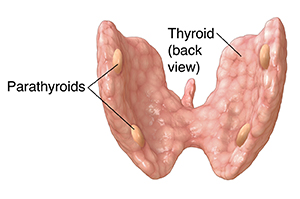
Back view of thyroid showing parathyroids.


How the parathyroid glands work

The parathyroid glands control the level of calcium and phosphorus in the blood by making parathyroid hormone (PTH). This is a chemical messenger that tells the body how to control calcium.


When blood calcium is low

When the blood calcium level is low, the glands make more PTH. This tells the body to increase the amount of calcium in the blood. To increase the blood calcium level, the body may absorb more calcium from food in the intestines. It may also take calcium from the bones and reabsorb more calcium from the urine.


When blood calcium is high

When the blood calcium level is high, the glands make less PTH. This tells the body to lower the amount of calcium in the blood. To lower the blood calcium level, less calcium is absorbed by the gut. Less calcium is taken from the bones. And more calcium is filtered out of the blood by the kidneys.


© 2000-2025 The StayWell Company, LLC. All rights reserved. This information is not intended as a substitute for professional medical care. Always follow your healthcare professional's instructions.

Find a doctor that's right for you.

From routine check-ups to groundbreaking treatments and beyond, Crestner Health is here to help you live your healthiest life.

Search our doctors
Related Articles
Read article
Metabolic Conditions
The Role of the Thyroid Gland

The thyroid is an endocrine gland located in the neck, just below the voicebox. It makes thyroid hormones that help keep all the body's cells working right. Read on to learn more.

Read article
Metabolic Conditions
Hyponatremia

Hyponatremia means low sodium levels in the blood. This health problem most often occurs after prolonged vomiting or diarrhea. Both of these conditions cause the body to lose too much water and sodium.

Read article
Brain Health
Rathke Cleft Cyst

Rathke cleft cysts are noncancerous fluid-filled growths that develop between the parts of the pituitary gland at the base of the brain. They develop while a baby is growing in the uterus. A Rathke cleft cyst develops from a piece of the fetus' developing Rathke pouch, which ultimately becomes part of the pituitary gland.

Read article
Metabolic Conditions
Understanding Primary Hyperparathyroidism

Primary hyperparathyroidism is when there's too much parathyroid hormone in your blood. Read on to learn more about this condition.